
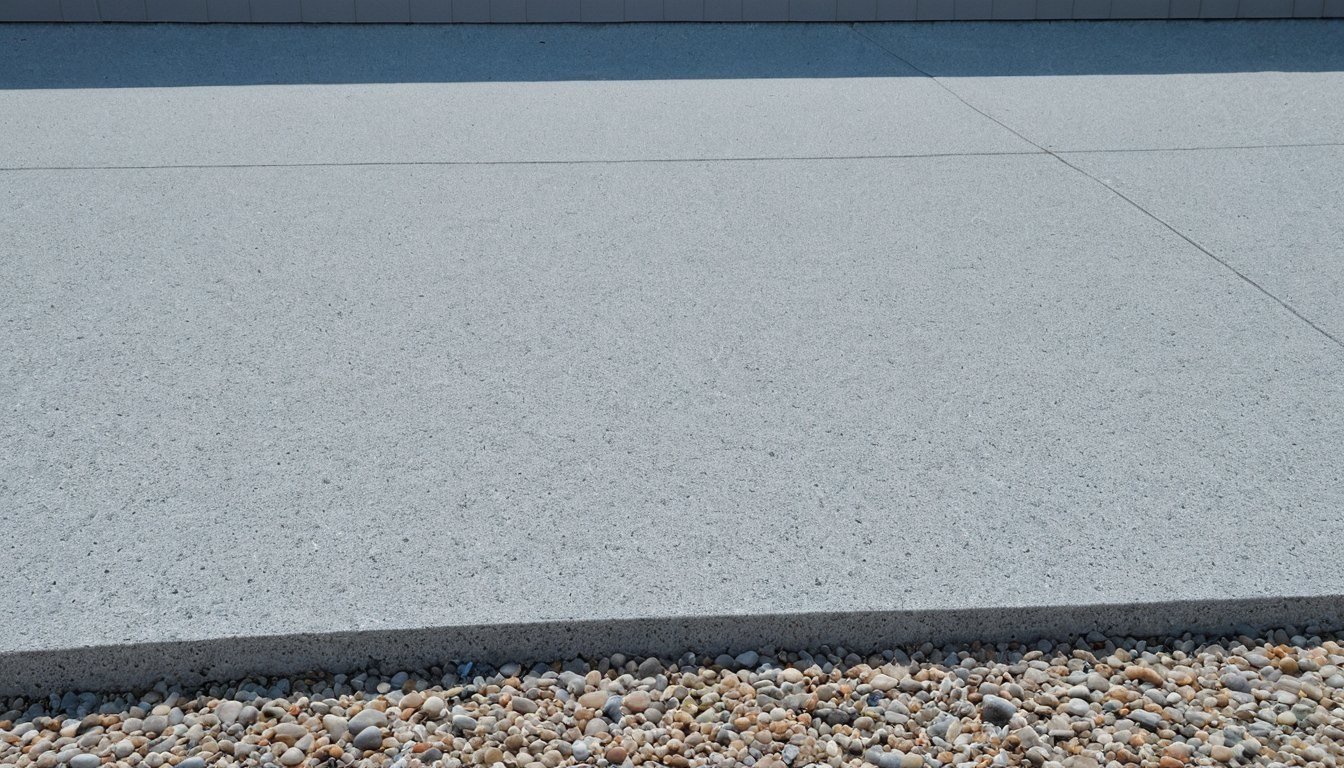
Some of the most useful concrete jobs are small ones. A pad under an air conditioner keeps it level and out of the wet sand. A pad for a generator keeps it steady, dry and safe. A pad for a hot tub gives you a solid base that does not sink. Done right, a pad can last for decades.
Coastal Concrete Wilmington pours concrete pads in Wilmington NC for homes and small businesses. We are locally owned, and we give a free written estimate before work starts.
Common uses for concrete pads
The same simple idea works for many things. A flat, hard base holds weight and stays dry. We pour pads for central air units, heat pumps and mini splits. We pour pads for generators, propane tanks and water tanks. We pour pads for hot tubs, trash bins and outdoor equipment.
Each use has different needs. A hot tub needs a very strong pad. A generator needs space for service. An air conditioner needs a pad that stays level.
- Air conditioner and heat pump pads
- Generator and propane tank pads
- Hot tub and water tank pads
- Pads for sheds and outdoor equipment
Sizing and building a pad
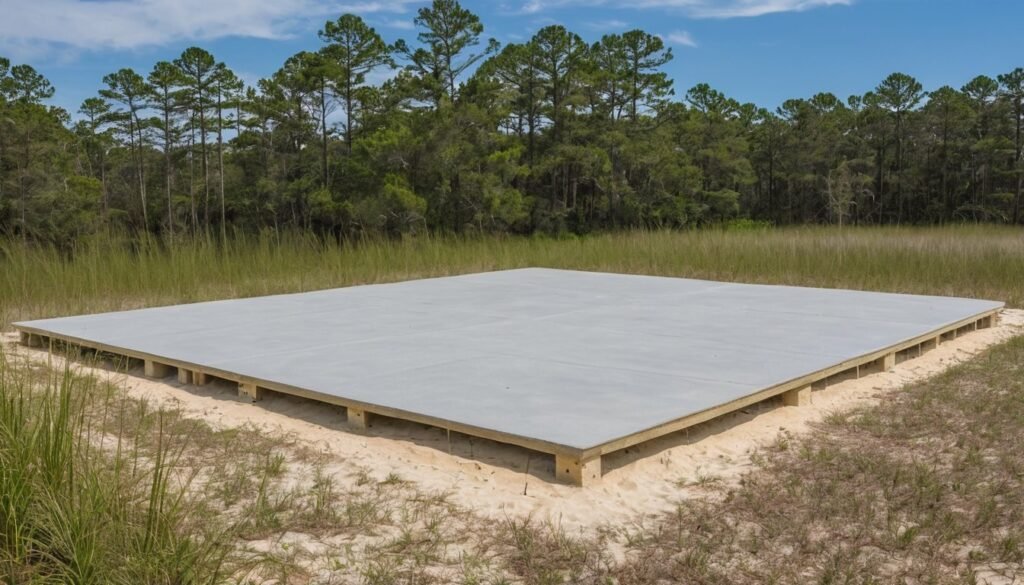
We start by asking what will sit on the pad and how much it weighs. Then we choose the size, the thickness and the steel. A light pad may be four inches thick. A heavy pad for a hot tub or a large tank may be five or six inches thick with more steel.
We also leave room around the equipment for service and for air flow. See concrete slab installation for larger flat work and shed and workshop slabs for buildings.
Level, high and dry on the coast
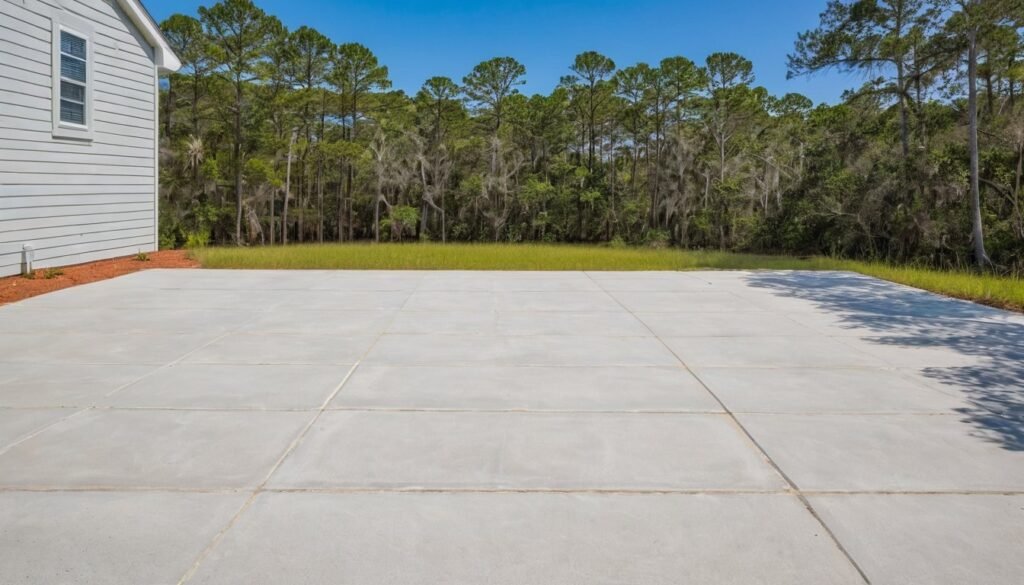
A pad that tilts causes real trouble. An air conditioner that leans can break a line. A generator that sinks can leak. Coastal ground is sandy and wet, so we remove soft soil and compact a base of crushed stone. Many coastal homes also raise equipment above flood level, and we can build pads at the height you need.
If your old pad has sunk, concrete leveling may be a quick fix.
Pad cost, timing and next steps
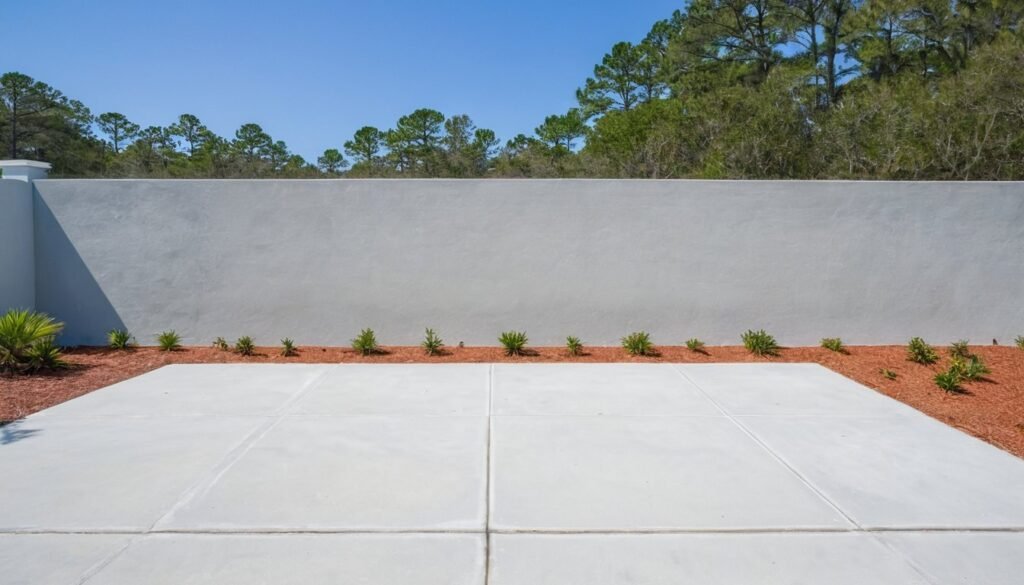
Price depends on size, thickness, steel and access. Small pads often take just a few hours to form and pour. Larger pads take a day. We give you a written price and schedule.
Call us any day from 5 AM to 10 PM or use the contact page. Tell us what equipment will sit on the pad.
Concrete Pads questions answered
How big should a concrete pad be for my air conditioner?
A pad should be a little larger than the unit, usually by three or four inches on each side, and often more to leave room for service. Many central air units sit on pads between 30 by 30 inches and 36 by 36 inches. Larger units and heat pumps need bigger pads.
Check the maker's guide for any rules about clearance. We also leave room for the refrigerant lines, the power and the drain. The pad should sit a few inches above the ground, so water and wet sand do not splash the unit. Tell us the make and model, and we will plan the right size and thickness for your pad.
Tell us the make and model of the equipment and the date it will arrive, and we will plan the pad and the cure around that day. Ask us to confirm the pad height, since clearance matters for concrete pads that hold equipment.
Can a concrete pad hold a hot tub?
Yes, if it is built for the load. A hot tub full of water and people can weigh several thousand pounds. The pad needs to be flat, strong and level, with steel inside. Most are at least four inches thick, and many are five or six inches. The base under the pad must be firm and well drained.
We ask for the size and weight of the tub, plus any rules from the maker. We also plan for the power line and a drain. See concrete slab installation for larger jobs. A good pad helps the tub stay level for many years, which protects the shell and the plumbing.
Keep an eye on clearance rules from the maker, since some units need open space on every side for air and for service. Tell us how the line sets, drains and wires will connect to the unit, so we can leave room for them in the concrete pads we pour.
Do I need a permit for a small concrete pad?
Often not for a simple pad, but it depends on the use and the place. A pad for a generator, a propane tank or a large shed may need a permit or must meet distance rules from property lines and buildings. Flood zone rules can affect how high equipment must sit. Some neighborhoods have HOA rules about where equipment can go.
We help you check before we pour. Tell us the address and the equipment, and we explain what usually applies. We also call NC811 before digging, so buried lines are marked. If your equipment comes with a plan or setback rules, send them. We build the pad to match.
A small pad is quick, but we still compact the base and place steel, because even a light pad can crack if it sits on soft sand. Ask us to add a small gravel border or a drain, since good drainage keeps concrete pads clean and dry beside the house.
How thick should a concrete pad be?
For light equipment, like an air conditioner, four inches is common. For heavier loads, like a hot tub, a large generator or a water tank, five or six inches with steel is wiser. A pad for a shed depends on what you store inside. Edges can be thickened for extra strength.
Thickness works together with the base. A thick pad on soft sand can still sink. We remove soft soil, compact a base and slope the pad so water runs away. We tell you the thickness, the steel and the base in your written estimate, so you can compare bids and be sure your equipment has the support it needs.
If you may add a second unit later, mention it now, and we can pour a larger pad with room to grow. Tell us if the pad sits in a low spot or near a downspout, and we will raise it and shape it so water cannot collect around your equipment.
Can you pour a pad next to my house without causing problems?
Yes, with care. A pad next to the house should slope away from the wall, so water does not run toward the foundation. We leave a small gap or an expansion joint between the pad and the house. We keep the top of the pad below siding and brick.
In a low coastal yard, water near a foundation is a real concern, so we check gutters and downspouts too. If the equipment drains water, like an air conditioner, we plan where that water goes. If you already see cracks in a wall, see foundation repair. We suggest a position and a slope that protect your home.
We also leave a small gap or a joint where the pad meets a wall or a walk, so each part can move without cracking. Ask us how we cure small concrete pads in summer, since even a little pad needs damp curing to reach its full strength in coastal heat.
How soon can I put equipment on a new pad?
Light equipment can often go on after about three to seven days. Heavier loads, like a hot tub full of water or a large generator, should wait until the concrete has cured for about 28 days, or as long as the maker says. Concrete keeps getting stronger as it cures.
We tell you when your pad is ready for each kind of load. In summer heat, we keep the pad damp at the start, so it cures well. If you have a delivery date for your equipment, tell us early. We can plan the pour for a time that gives the concrete enough cure time before the equipment arrives.
Please keep sprinklers off the new pad for a few days, and tell your installer to wait until we say the concrete is ready. Ask for a short list of care steps, such as keeping leaves off and sprinklers away, so your concrete pads stay in good shape for years.
Ready for a free estimate? Call (910) 981-2124 any day from 5 AM to 10 PM, or use the estimate form. Coastal Concrete Wilmington is locally owned and gives clear written estimates for patios, driveways and slabs.