
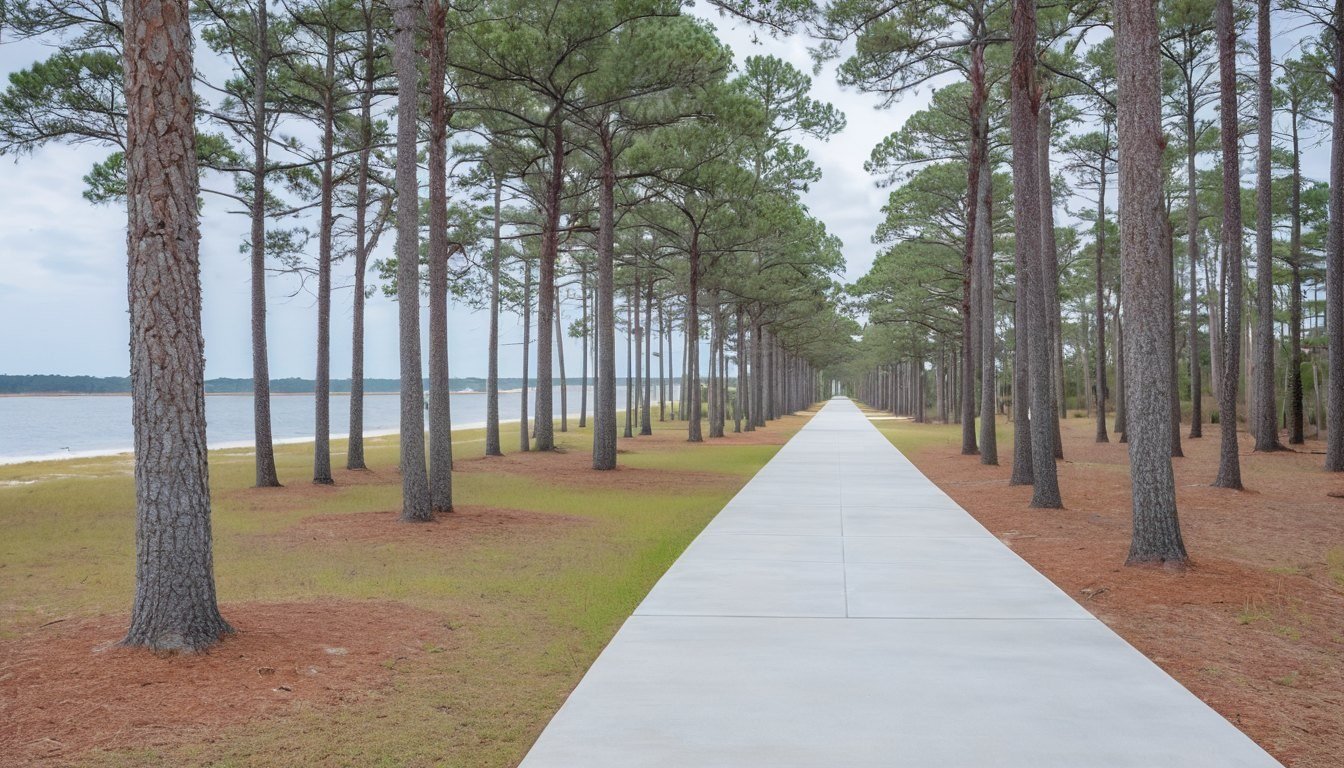
A good walkway does a simple job. It gets people from the street to the door, or from the driveway to the backyard, without wet sand, puddles or a trip. In Wilmington, a walkway also has to survive sandy ground, big oak and pine roots and heavy summer storms.
Coastal Concrete Wilmington builds concrete walkways in Wilmington NC for homes and small businesses. We are locally owned, and we send a free written estimate before we begin.
Planning concrete walkways that fit your home
We start with how you walk. Where do guests park? Where does the mail come? Where do you carry groceries or push a cart? Then we mark the path with paint. A straight walk costs less. A gentle curve feels softer and suits many front yards.
Width matters. Most front walks are four feet wide, which lets two people walk side by side. Side paths can be three feet wide. Accessible paths may need more room and a gentle slope.
- Front walks to the door or porch
- Side yard and gate paths
- Walks from the driveway to the backyard
- Garden and dock access paths
Roots, sand and rain
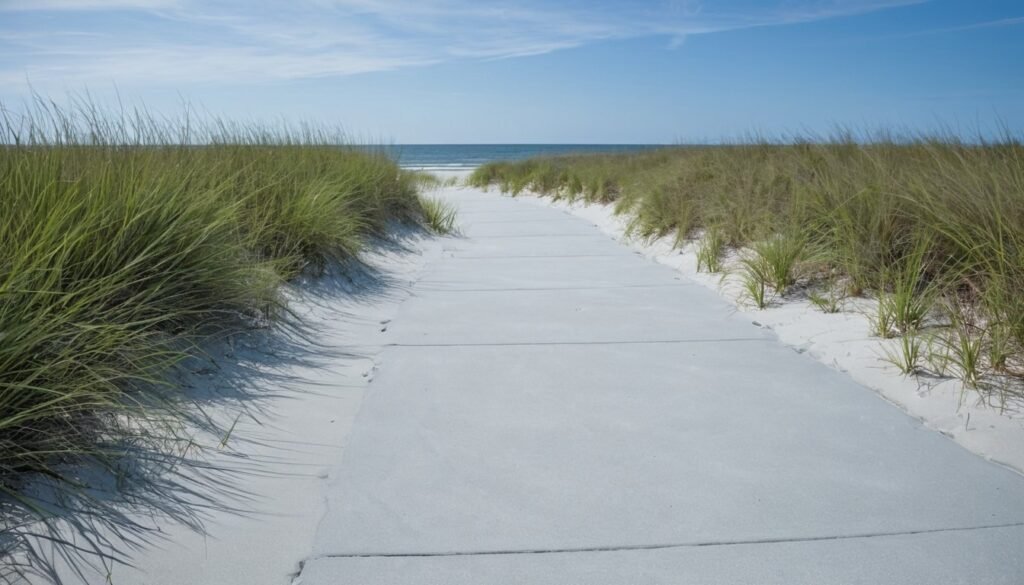
Trees are a common problem. A big live oak or pine can lift a walk in just a few years. We look at roots, cut joints in smart places and sometimes shift the path a few feet. We also thicken edges and compact the base, so sand does not wash out.
Slope is important. A walkway should drain to the side so water does not sit and grow green algae. We build in a slight cross slope and keep the surface a bit above the soil to avoid trapping water.
Finishes and safety for concrete walkways
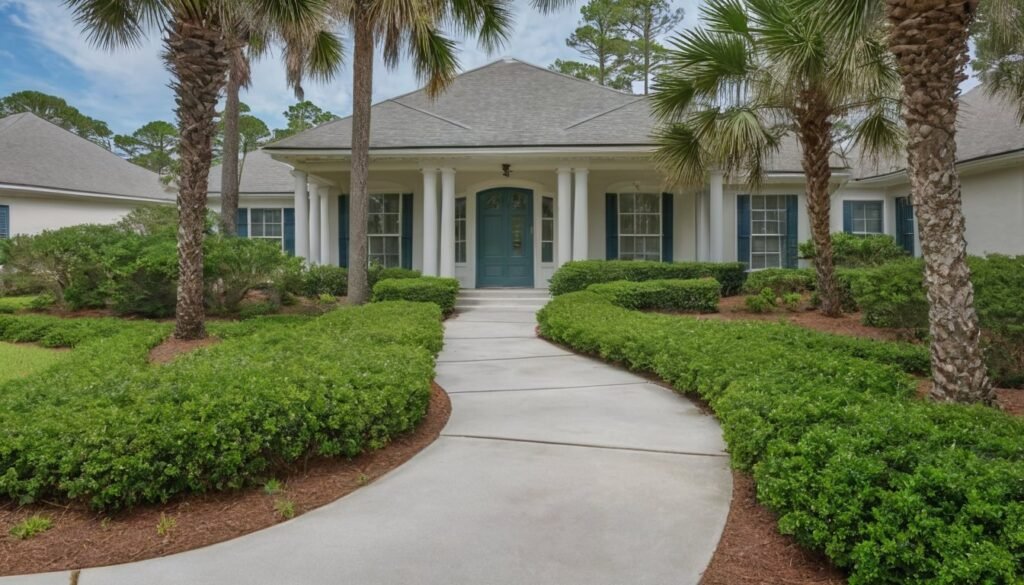
A broom finish is the safest and most common. It grips when wet. A light salt finish or exposed aggregate adds more texture. Color and borders can match the house. See exposed aggregate concrete and concrete staining and sealing for ideas.
If you have a trip hazard now, concrete leveling may fix it for less than a new walk.
Walkway cost, timing and next steps
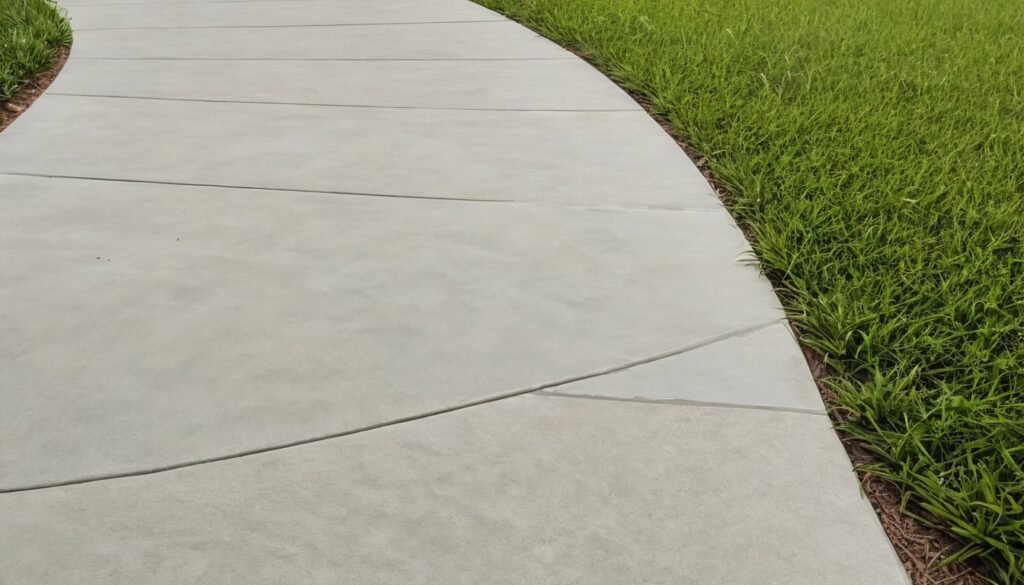
Price depends on length, width, thickness, tear out and finish. Most walkways take one or two days to pour, then a few days to cure. We give you the schedule and the price in writing.
Call us any day from 5 AM to 10 PM or use the contact page. We will measure and give you a free written estimate.
Concrete Walkways questions answered
How wide should a concrete walkway be?
Most front walks are four feet wide. That is enough for two people to walk side by side and for a package or a cart to pass. Side yard paths and garden walks can be three feet wide, which saves concrete. If you want a very welcoming entry, five feet looks grand and is easy to use.
Accessible routes have their own rules. A path for a wheelchair or a walker needs more width, a very gentle slope and a firm, smooth surface with no gaps. We can build to those needs. Tell us who will use the path, and we will suggest a width and a slope. We also check any HOA or city rules before the pour.
Walk the path with us before the pour, and you will know exactly how the concrete walkways will feel in daily use. Ask us to mark the path with paint so you can walk it.
How thick should a concrete walkway be?
A standard residential walkway is four inches thick. That is enough for walking, mowers and light carts. Where a walk crosses a driveway, or where a service truck may drive over it, the concrete should be thicker, often five or six inches, with steel. Edges next to the street can also need extra thickness.
A solid base matters as much as thickness. On sandy ground, we remove soft soil and organic matter, add compacted stone and set forms to the right slope. We also place control joints so cracks follow neat lines. We tell you the thickness, the base and the steel in your written estimate, so you can compare bids.
A thick edge near the street helps concrete walkways resist cracking from mowers and delivery carts. Tell us about any steps, slopes or gates along the route, since a good walkway plan keeps the grade gentle and the surface safe for everyone.
Why do walkways crack and lift near trees?
Roots grow toward water and loose soil, and a walkway base gives them both. As roots get thicker, they push up the concrete. Roots also pull water from the sand, which can leave gaps under a slab. That movement cracks the slab and lifts one side.
We look at the trees before we build. Sometimes we shift the path a few feet to give the roots room. Sometimes we use a thicker slab with steel, or add a root barrier. If a walk has already lifted, concrete leveling or a new section can fix it. Cutting large roots can harm a tree, so we talk it over with you first.
Giving the roots room is the simplest way to help concrete walkways in Wilmington NC last longer. Ask us how we will handle the places where the new walk meets the driveway or the porch, so the joints are neat and water cannot pool at the seams.
Do I need a permit to build a walkway in Wilmington?
A walk on your own lot often needs no permit. A public sidewalk along the street is different. It sits in the right of way, and the city, the county or the state has rules about width, slope, thickness and the curb ramp. Some neighborhoods also have HOA rules, and homes near the water can have coastal rules.
We help you check before we pour. We call NC811 before we dig, so underground lines are marked. If a permit is needed, we explain the steps and have the forms ready for inspection. If you are not sure whose property the walk crosses, ask us. We can look at your lot and tell you who to call.
Walks near the street may need approval, so we help you ask the right questions up front about your concrete walkways. Tell us about tree roots near the path, and we will show how a slight curve or a thicker slab can keep your walkway flat for many more years.
How long does a new walkway take to cure?
You can walk on a new concrete walkway after about a day or two. Keep pets, bikes and kids off it until we say it is ready. Wheelbarrows and mowers should wait about a week. The concrete reaches its design strength in about 28 days, so avoid heavy loads until then.
Weather matters. In a hot, dry stretch, we keep the surface damp or covered, so it cures slowly. In wet weather, we cover it so rain does not mar the finish. We tell you the exact days for each use, and we mark the walk with stakes and tape. A little patience gives you a path that lasts many years.
Cure time on concrete walkways is short, so you will be back on your path in no time. Ask us about a light salt finish or a soft broom pattern, since both give grip and look clean on a coastal walkway that gets wet from dew and rain.
Can you repair a walkway instead of replacing it?
Often, yes. A single lifted slab can be leveled. A cracked corner can be patched. If the walk is mostly in good shape, repair costs far less than a new one. If the slabs are broken, crumbling or sunk in many places, replacement is the better choice.
We look at the whole path, explain what we see and give you the price of each option. See concrete repair and concrete leveling for details. A free visit costs you nothing, and it helps you decide whether to fix the problem or start fresh. We also point out any drainage problem that caused the damage.
Fixing a trip hazard is often quick. Tell us where the problem is and we will plan the right fix for your walkways. Ask for photos of walkways we poured, so you can see the finish and the joints in real light before you choose yours.
Ready for a free estimate? Call (910) 981-2124 any day from 5 AM to 10 PM, or use the estimate form. Coastal Concrete Wilmington is locally owned and gives clear written estimates for patios, driveways and slabs.