
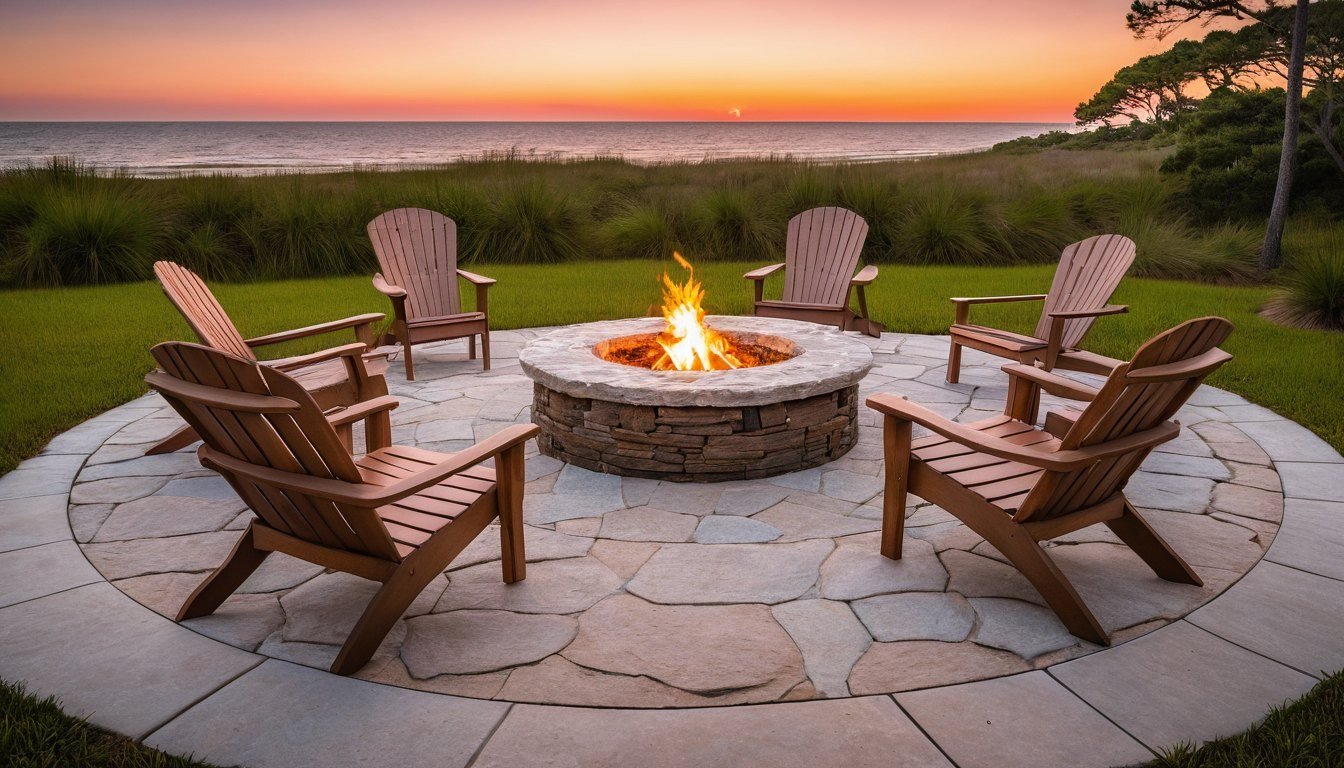
Wilmington evenings are made for the backyard. A grill going, a fire pit glowing, friends gathered around a counter. Behind every good outdoor kitchen or fire pit is a pad that is flat, strong and well drained. Stone islands and built in grills are heavy, and they need real concrete under them.
Coastal Concrete Wilmington pours outdoor kitchen and fire pit pads in Wilmington NC. We are locally owned, and we give a free written estimate before the first stake goes in.
Planning your outdoor kitchen or fire pit pad
We start with a sketch. Where will the grill island go? Where do the gas and the power come from? How far from the house should the fire pit sit? We plan the pad size from the design, and we leave space for walking, seating and serving.
A pad that is too small is hard to fix later, so we mark the layout on the ground with paint before we pour.
- A strong pad for a stone or block island
- Sleeves for gas, water and power lines
- Space around a fire pit for seating
- A slope that drains away from the house
Heat, weight and safety
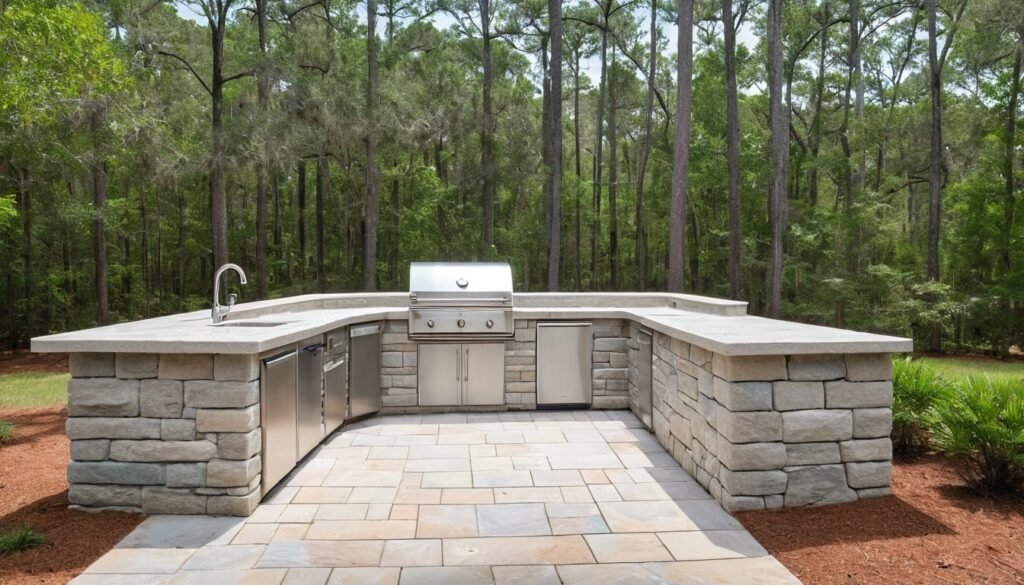
Fire pits and grills put heat on the slab. Concrete handles heat well, but a hot spot can crack a thin pad, so we pour thicker concrete under a fire feature and leave space between the fire and nearby walls. A stone counter and a built in grill can weigh thousands of pounds, so the slab needs steel and a firm base.
Safe distances from the house, fences and trees matter. We follow the maker's guides and the local rules.
Finishes and details
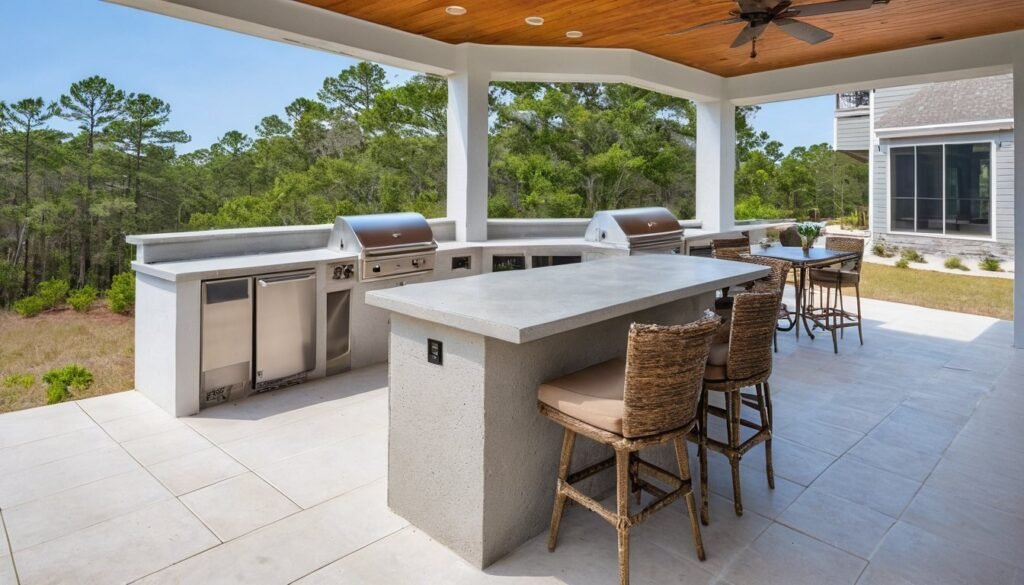
The pad can be a simple broom finish or a colored, stamped or exposed stone surface. A border of a second color frames the space. We can add a step, a seat wall or a small ramp. See concrete patio installation, exposed aggregate concrete and concrete pads.
We bring samples so you can see how the finish fits your home and your outdoor kitchen.
Outdoor pad cost, timing and next steps
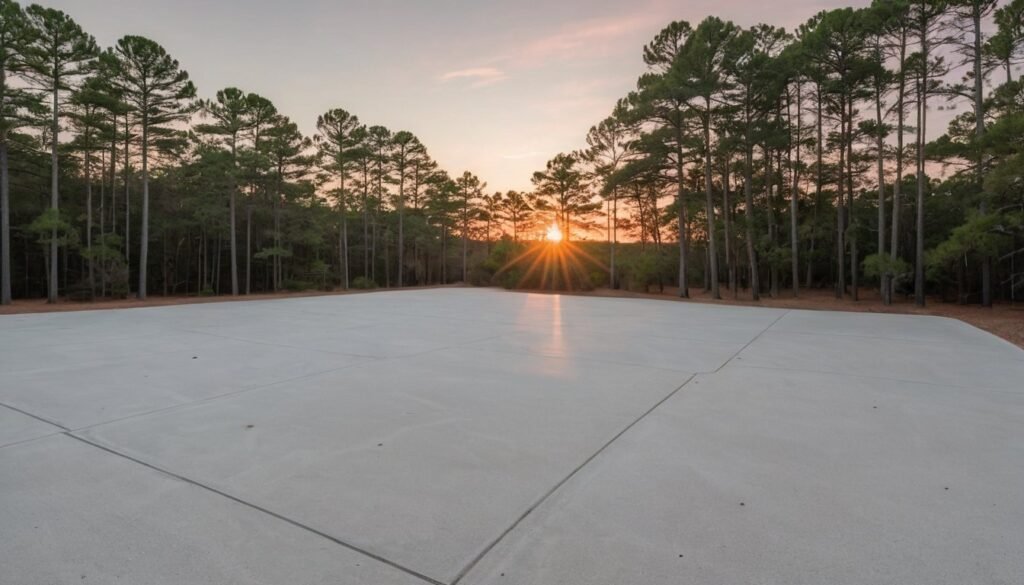
Price depends on the size, thickness, finish and access. Most pads take one or two days to pour, plus a week to cure before the builder sets heavy stone. We give you a written price and a schedule.
Call us any day from 5 AM to 10 PM or use the contact page. Send your design if you have one.
Outdoor Kitchen and Fire Pit Pads questions answered
How thick should an outdoor kitchen pad be?
Most outdoor kitchen pads are at least four inches thick, and five or six inches with steel is a safer choice for heavy stone islands and built in grills. Under the heaviest parts, like a block island with a stone top, we may thicken the slab or add steel. The pad also needs a firm, compacted base.
The weight of the finished kitchen is more than people expect. A slab on soft sand can settle and crack, which cracks the counter above it. We ask for the plan and the weight, then recommend a thickness. You get the thickness, the steel and the base in your written estimate, so you can compare bids and plan with confidence.
Share your kitchen design or kit sheet with your call, and a concrete company in Wilmington NC can plan the pad and the sleeves. Ask us to confirm the pad size against your design, since the outdoor kitchen pad should match every counter and appliance.
Can I put a fire pit directly on a concrete patio?
Many people do, and concrete handles heat better than wood or plastic. But a hot fire can crack a thin slab or discolor the surface. For a built in stone or block fire pit, we often pour a thicker pad and leave a gap between the fire and nearby walls. A metal or stone ring with an inner liner helps protect the concrete.
Follow the maker's guide for any kit, and check local fire rules. We can pour a pad with a place for the fire pit and room around it for chairs. See concrete patio installation. We also keep the fire pit well away from the house and from low branches.
Ask your builder for the weight of the finished island, and we will use that number to pick the thickness. Tell us the brand of your grill and the type of fuel, since the outdoor kitchen pad must leave the right clearance and space for service.
How do you plan for gas, water and power lines?
We plan them before the pour. Sleeves or conduit placed in the concrete let lines pass through without cutting the slab later. Your plumber or electrician marks where they need to come up, and we set the sleeves in the right spots. We also keep a record with photos, so you know where lines run.
If you plan to add a kitchen later, we can place spare sleeves for future use. That costs little during the pour and saves a lot of trouble. Check local rules for gas and power work, since licensed trades handle those parts. We coordinate with them so the slab is ready when they arrive.
Leave spare sleeves for future lines, since it costs little during the pour and saves a lot of work later. Ask about a raised edge or a small curb, since a neat edge frames an outdoor kitchen pad and keeps mulch and sand off the concrete.
How far should a fire pit or grill be from my house?
Distances depend on the maker's guide, the type of fuel and the local rules. A common guide is at least ten feet from walls and overhangs for a wood fire pit, but check the rules for your kit and your area. Low tree branches, fences and covered porches also matter.
We help you place the pad with those distances in mind. We mark the layout in the yard, so you can see how it feels. We also think about wind, since coastal breezes can blow smoke and sparks. A spot sheltered from the wind often works best. We follow your plans, and we help you ask the right questions about rules.
We mark the layout on the ground with paint, so you can walk the outdoor kitchen before any concrete is placed. Tell us about the sun and the wind in your yard, and we will place the fire pit and the seating where smoke blows away from guests.
What finish is best for an outdoor kitchen floor?
A broom finish is simple and grips well when wet. Many owners add color, exposed stone or a stamped pattern for style. Grease and spills are the main concern, so a good sealer is important. A penetrating sealer keeps oil from soaking in, and it makes cleanup easy.
Avoid a glossy, slick finish where people carry hot food and drinks. We bring samples and talk through the feel and the cleaning. See concrete staining and sealing for color and protection. We will help you choose a floor that looks good with your stone and your siding, and is safe to walk on.
Wind is a coastal factor, so we help you place the fire pit where breezes will not blow smoke toward the seats. Ask us about a color or a border for the outdoor kitchen pad, since a second color can mark the kitchen zone and the seating zone clearly.
Can you build a pad on a sloped yard or near trees?
Yes. A slope needs a level base, which we make by cutting into the high side or building up the low side with compacted fill. Sometimes a small retaining wall helps. Trees need care, since roots near a slab can lift it and fire pits should stay away from branches.
We look at the yard, the trees and the way water flows, then suggest a spot and a plan. A good location makes the space more comfortable. We show you the sketch and the price for each option at the estimate, so you can pick what fits your yard and your budget.
A sealer on the kitchen floor makes grease cleanup simple, and we can add it once the concrete has cured. Ask for a written schedule that includes the cure time, since stone and appliances should go on a pad that is hard and dry, not fresh.
Ready for a free estimate? Call (910) 981-2124 any day from 5 AM to 10 PM, or use the estimate form. Coastal Concrete Wilmington is locally owned and gives clear written estimates for patios, driveways and slabs.