
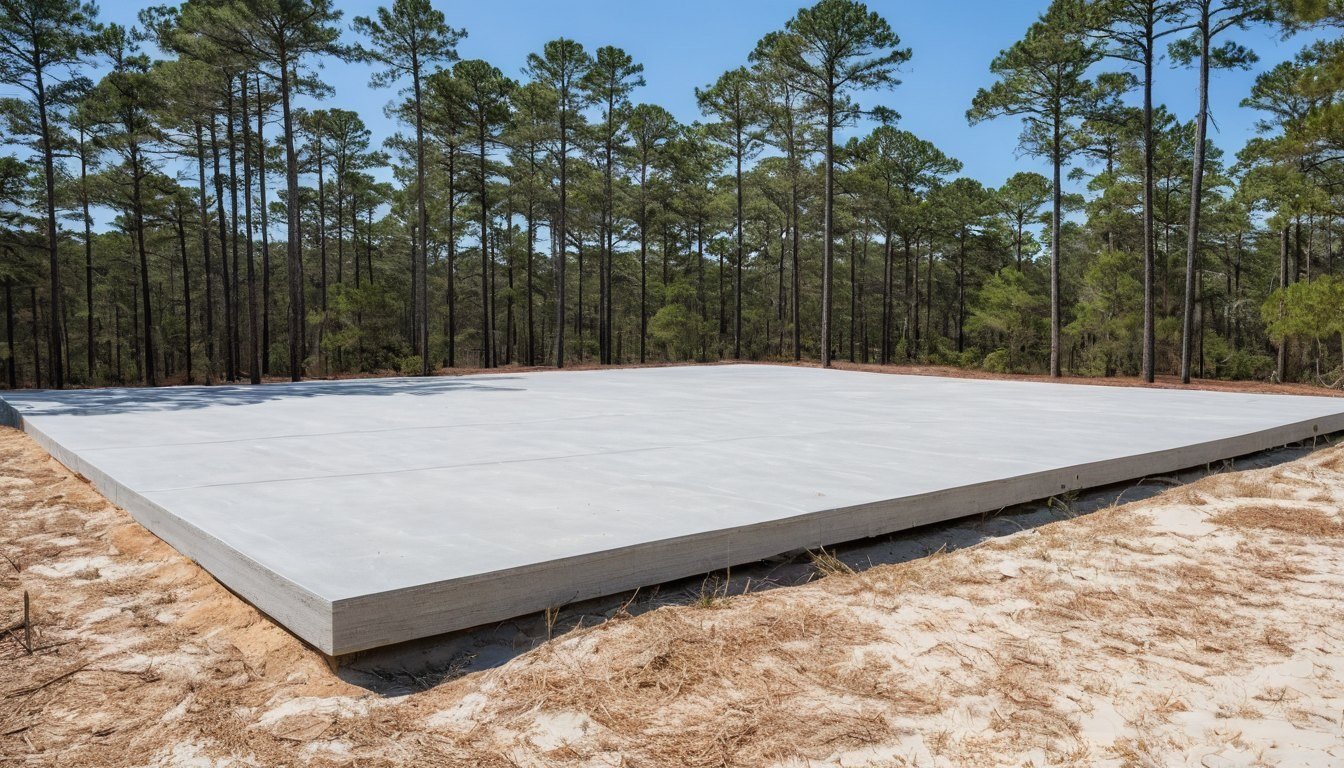
A slab looks simple. It is a flat, hard floor made of concrete. But in Wilmington, a slab sits on sandy ground with a high water table, in a place where storms can dump an inch of rain in an hour. A slab poured fast and thin can crack, tilt or settle. One planned for the ground can stay flat for decades.
Coastal Concrete Wilmington handles concrete slab installation in Wilmington NC for houses, garages, workshops, additions and equipment pads. We are locally owned, we have the phone on every day from 5 AM to 10 PM and we give a free written estimate before any work starts.
What a good concrete slab installation needs
A strong slab is more than concrete. It starts with the ground. We strip the grass and roots, remove soft spots and compact a firm base of crushed stone or select fill. Then we set forms, lay a vapor barrier when the slab will be inside, tie steel rebar on supports and pour at the right thickness.
Most home slabs are four inches thick. Heavy slabs for trucks, shops and equipment are thicker. We tell you what your plan needs and why.
- A firm, compacted base with the right slope
- Steel rebar or wire set on chairs, not dragged through the sand
- Control joints cut at the right spacing
- Slow, careful curing so the surface does not crack
Slabs on sand, fill and a high water table
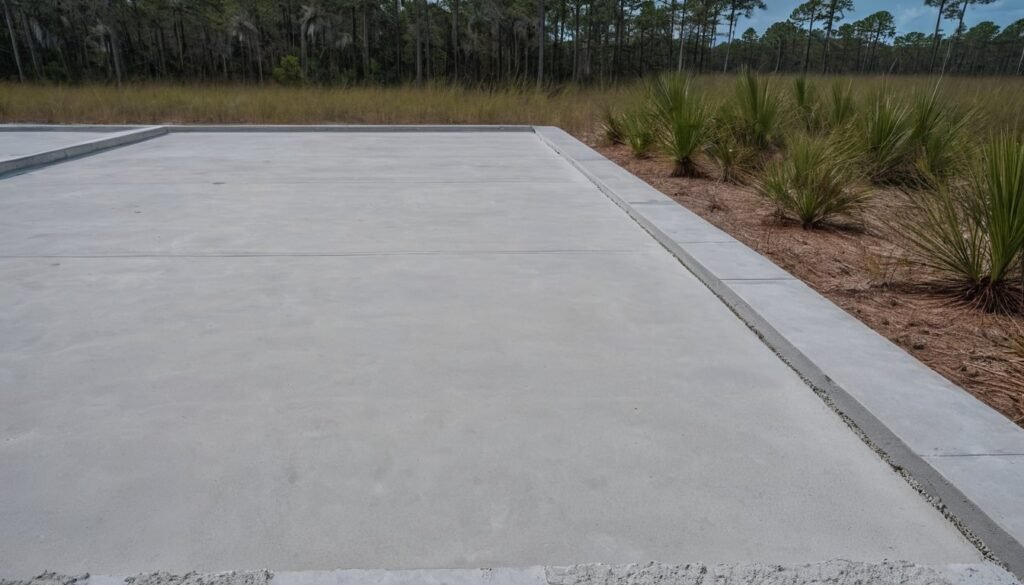
Sand drains well, but it can wash out under a slab, and a high water table can soften the base after heavy rain. We raise the pad a little above the surrounding ground, compact each layer and slope the surface so water leaves.
On many Wilmington lots, fill dirt was added when the neighborhood was built. If it was not compacted well, it settles. We probe the soil before we price a slab, so we know what is under it.
Slab jobs we pour most often
Many customers call us for a backyard shop slab, a carport, a garage or a pad for a hot tub or a shed. We also pour slabs for room additions and for small commercial buildings. See also concrete carport slabs, shed and workshop slabs and concrete pads.
Each job gets a visit, a measured sketch and a written price. We do not guess.
Concrete slab cost, timing and next steps
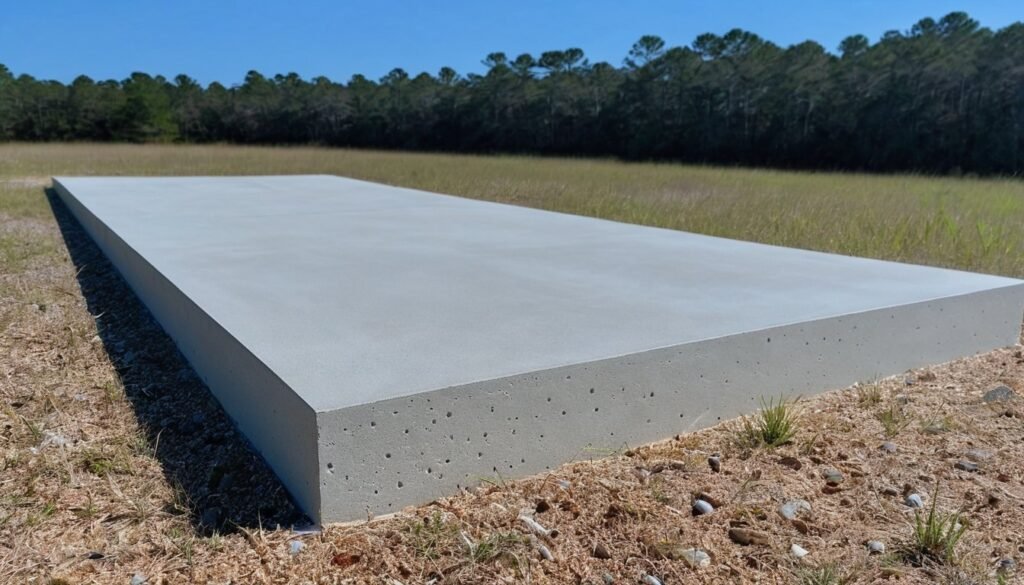
The price of a slab depends on size, thickness, base work, steel, finish and access. Most residential slabs take one day to pour and a week to cure before heavy use. We schedule the pour, call you before each step and clean up when we finish.
Call us any day from 5 AM to 10 PM or use the contact page. We will come out, measure and send you a written estimate.
Concrete Slab Installation questions answered
How thick should a concrete slab be in Wilmington NC?
Most house slabs, patios and garage floors are poured four inches thick. That is enough for foot traffic and normal cars. If you plan to park a heavy truck, a motorhome or a boat trailer, or you plan to store heavy machinery, the slab should be five or six inches thick with more steel. Edges that carry walls or heavy loads are thicker still.
Thickness is only part of the story. The base under the slab and the steel inside it matter just as much. On sandy coastal ground, a thick slab on a poor base can still crack. We look at the use, the soil and the budget, then tell you what thickness makes sense. You get the number in writing.
If you are comparing, ask each contractor to name the slab thickness and the steel size, since concrete slab installation prices only make sense side by side.
How long before I can walk or drive on a new slab?
You can usually walk on a new concrete slab after a day or two. Wait about seven days before you drive a car or pickup on it. Heavy vehicles like delivery trucks, RVs and boats on trailers should wait about 28 days, when the concrete has reached its design strength. Concrete keeps getting stronger for weeks, even after it feels hard.
Heat and humidity change the schedule a little. In a coastal summer, concrete cures fast, but a sudden storm can mark a fresh surface, so we watch the radar and keep covers ready. We tell you the exact day the slab is ready for each use. If you have a delivery or a move coming, tell us when you call.
Always ask what day the concrete will reach full strength. We write that date on your estimate, so concrete slab installation never leaves you guessing. Ask us to mark the slab outline on the ground, so you can walk it first.
Why do some concrete slabs crack, and can cracks be avoided?
Almost every slab gets a crack at some point, because concrete shrinks as it dries. The goal is to control where the cracks go and keep them small. We cut control joints into the slab so it cracks along straight lines on purpose. We also use steel, a firm base and good curing to keep the slab tight.
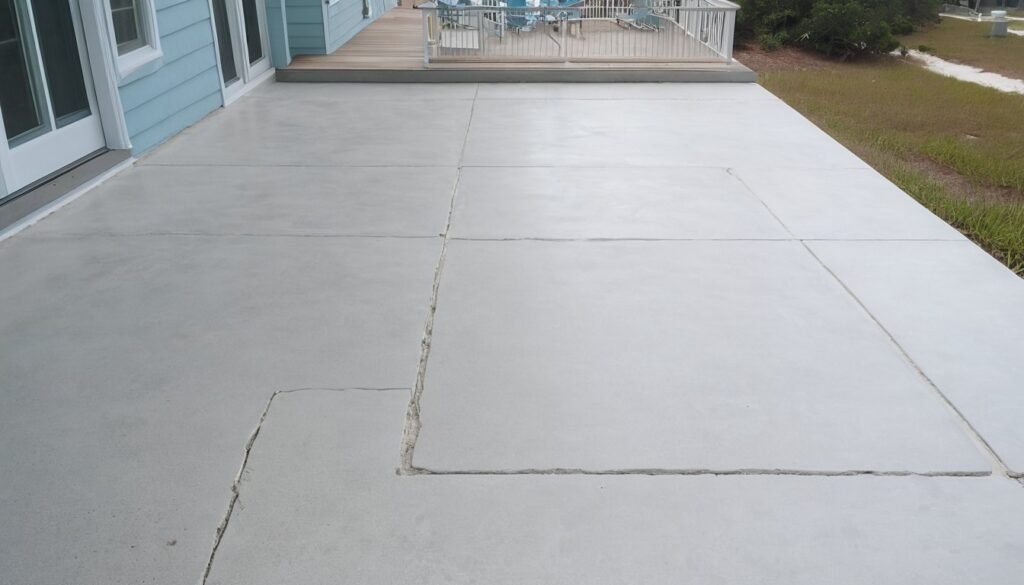
Big, wide cracks usually come from the ground. On the coast, water can wash out the sand under a slab, or a high water table can soften the base. Tree roots and leaking pipes make it worse. We cannot promise a slab will never crack, but a well planned slab on a good base cracks far less. If a slab has already cracked, see concrete repair.
Good planning on the first pour is the cheapest way to avoid repair later, and our slabs get joints, steel and curing that fit coastal ground.
Do I need a permit to pour a slab in Wilmington?
It depends on what the slab is for. A simple patio or sidewalk on your own lot may need no permit. A slab that will carry a building, a garage, an addition or a pool equipment pad may need a permit and an inspection. Rules differ between the City of Wilmington, New Hanover County and the nearby towns, and homes near the water may face flood zone and coastal rules too.
We help you work through it. Tell us your address and what you plan to build, and we will explain the steps. We also call NC811 before digging, which is a free service that marks public utility lines. If a permit is needed, we make sure the slab is ready for inspection before the pour.
If you are not sure whether you need a permit, call before you buy materials. A short call can save a hold on your concrete slab installation.
Can you pour a slab in a flood zone or on a low lot?
Yes, with extra planning. Many Wilmington lots sit in or near flood zones, and rules may limit how a slab can be built there. In some cases the slab must sit higher, or the building must be raised on piers. We follow the plans and the rules that apply to your property, and we do not guess about structural details.
For a simple pad or patio on a low lot, we raise the base with compacted fill and slope the surface so water leaves. We also keep drains and swales in mind. See foundation repair if you are dealing with an older slab that has settled. A free visit lets us look at the lot and talk through your options.
We also walk the lot after a rain when we can, since that shows us where water collects better than any drawing does. A quick sketch of the building or pad helps us size the concrete slab installation correctly.
What is the difference between a slab and a patio?
A patio is a slab used as an outdoor living space. The concrete itself is often the same. The difference is in the details. A patio usually has a nicer finish, a gentle slope away from the house, decorative joints and sometimes color or stamping. A utility slab for a shop or a shed may have a plainer finish and thicker concrete.
If you want a backyard space for chairs, a grill and a fire pit, look at concrete patio installation. If you want a floor for a building, a pad for equipment or a base for a structure, a slab is the right word. Either way, we plan the base and steel the same careful way.
Not sure which one you need? Describe your plan, and we will tell you plainly whether a slab or a finished patio is the better fit. Share the plans with your builder too, so every trade knows the slab size and the schedule.
Ready for a free estimate? Call (910) 981-2124 any day from 5 AM to 10 PM, or use the estimate form. Coastal Concrete Wilmington is locally owned and gives clear written estimates for patios, driveways and slabs.